Cameron Berger · 26 October 2026
Reevaluating Data Pipeline Orchestration Techniques for Maintaining Integrity in Evolving Multi-Tenant Web Platforms
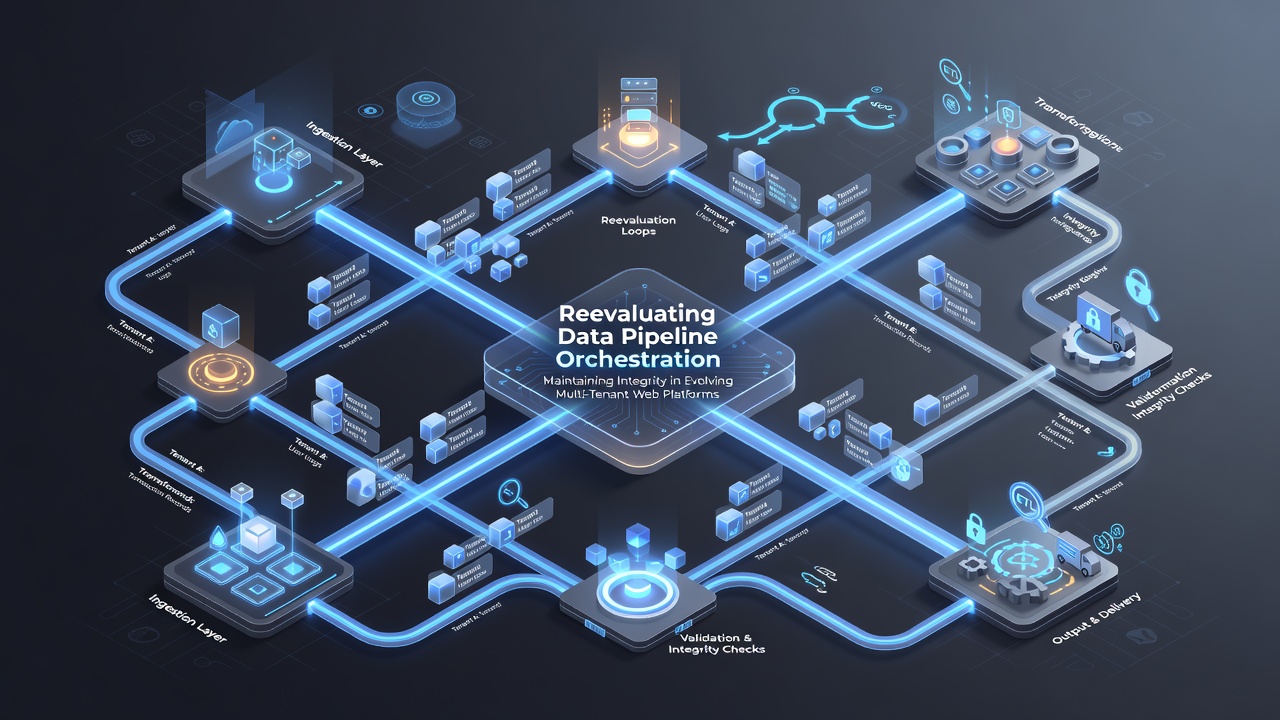
Multi-tenant web platforms continue to expand their data handling requirements as user bases grow and regulatory demands shift, which pushes teams to reassess how they orchestrate pipelines while preserving data integrity across shared environments. Researchers have documented cases where tenant isolation failures led to cross-contamination of datasets, prompting reevaluation of existing orchestration layers that once sufficed for simpler architectures. Data shows that platforms managing thousands of tenants now rely on distributed scheduling systems combined with validation checkpoints to catch inconsistencies before they propagate downstream.
Studies from academic institutions indicate that orchestration frameworks must incorporate dynamic partitioning schemes so each tenant's data streams remain segregated during ingestion, transformation, and storage phases. One study revealed that platforms adopting container-based orchestration reduced integrity incidents by coordinating task execution across nodes while enforcing strict namespace boundaries. Observers note that these approaches become essential when platforms scale horizontally and introduce new services without disrupting ongoing tenant operations.
Core Challenges in Multi-Tenant Data Flows
Platform operators face recurring issues with schema drift and version conflicts when multiple tenants evolve their data models independently, and these changes often collide inside shared pipelines. Figures reveal that synchronization delays between tenant-specific updates and central orchestration logic account for a notable portion of integrity breaches reported in industry surveys. Yet effective techniques address this through automated schema registries that validate incoming payloads against tenant-defined rules before any processing begins.
Take one case where experts found a large-scale platform experiencing repeated data duplication across tenants because the orchestration engine lacked tenant-aware routing logic. After implementing context-aware task dispatchers, the system began routing jobs based on tenant identifiers embedded in metadata headers, which prevented overlap while maintaining throughput. Data from monitoring tools showed measurable drops in duplicate records once these adjustments took hold.
Techniques Under Reevaluation
Engineers currently examine hybrid orchestration models that blend centralized coordinators with edge-level validators, allowing real-time checks without creating bottlenecks at the core pipeline. Research indicates that event-driven architectures paired with idempotent operations help maintain consistency even when network partitions occur between tenant regions. Those who've studied this know that retry mechanisms must account for tenant-specific service level agreements to avoid cascading failures that affect unrelated parties.
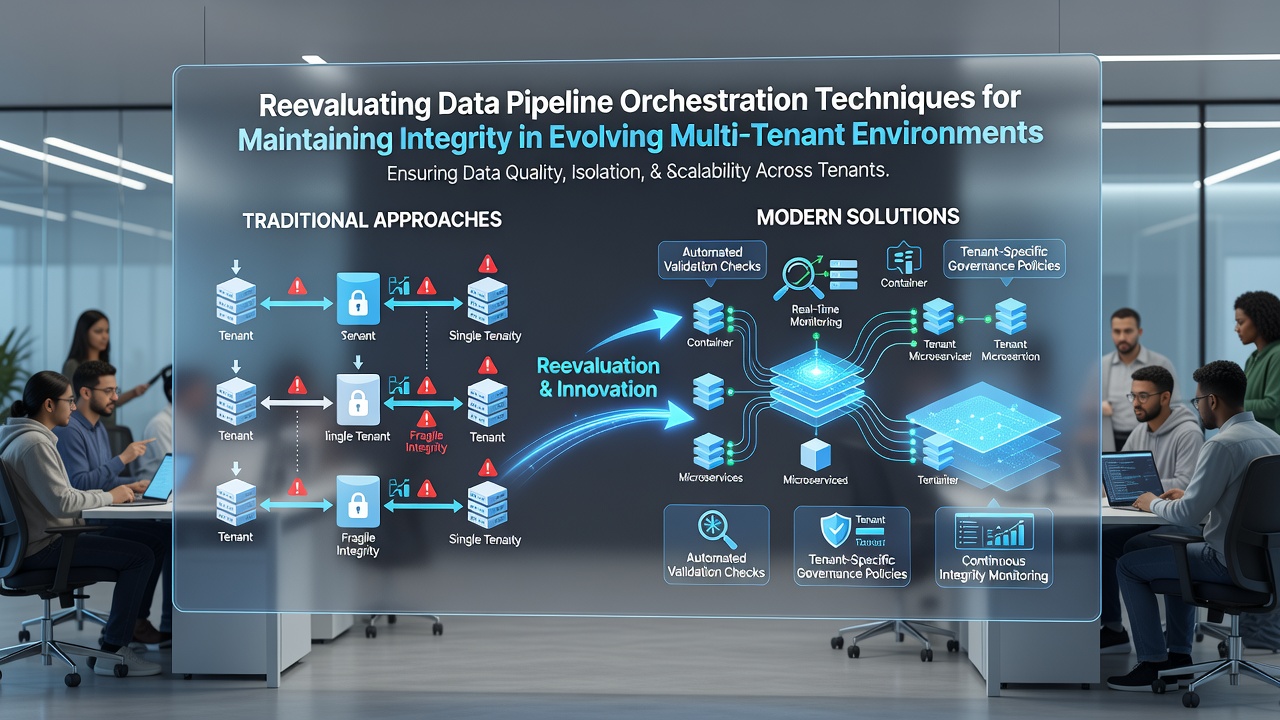
According to reports released around October 2026, several organizations began testing orchestration extensions that embed cryptographic hashing at each stage to verify data provenance across multi-tenant boundaries. These methods allow teams to trace any record back to its originating tenant without exposing other tenants' information. What's interesting is how such additions integrate with existing tools like workflow schedulers while adding minimal overhead during peak loads.
People often find that combining stream processing with batch orchestration creates hybrid pipelines better suited for platforms where some tenants require near-real-time updates while others operate on scheduled cycles. Evidence suggests careful configuration of backpressure controls prevents one tenant's high-volume traffic from starving resources allocated to others. And yet the ball's in the platform team's court when deciding which checkpoints to prioritize based on compliance needs that differ by region.
Implementation Patterns Observed in Practice
Teams have observed success when they layer tenant-specific access controls directly into the orchestration layer rather than relying solely on downstream storage permissions. This setup ensures that pipeline tasks cannot inadvertently access unauthorized datasets even during debugging or scaling events. A report from the National Institute of Standards and Technology outlines baseline controls for such environments, and similar guidance appears in materials from the Australian Cyber Security Centre that emphasize logging and audit trails for every orchestrated step.
One study revealed that platforms using declarative pipeline definitions gained flexibility to update orchestration logic without redeploying entire services, which proved useful when tenants requested custom validation rules. Observers note that these definitions often reference shared libraries for common integrity checks while allowing overrides for specialized tenant requirements. Data indicates reduced deployment times once teams shifted away from imperative scripting toward these model-driven approaches.
Conclusion
Reevaluation of orchestration techniques continues as multi-tenant platforms encounter new data volumes and compliance layers, with documented patterns showing the value of integrated validation, tenant-aware routing, and provenance tracking. Platforms that adopt these methods report sustained integrity levels even as their architectures evolve, and ongoing research supplies additional refinements for teams managing distributed environments.