Cameron Berger · 28 September 2026
How Cyclic Development Shapes Resilient Enterprise Web Systems
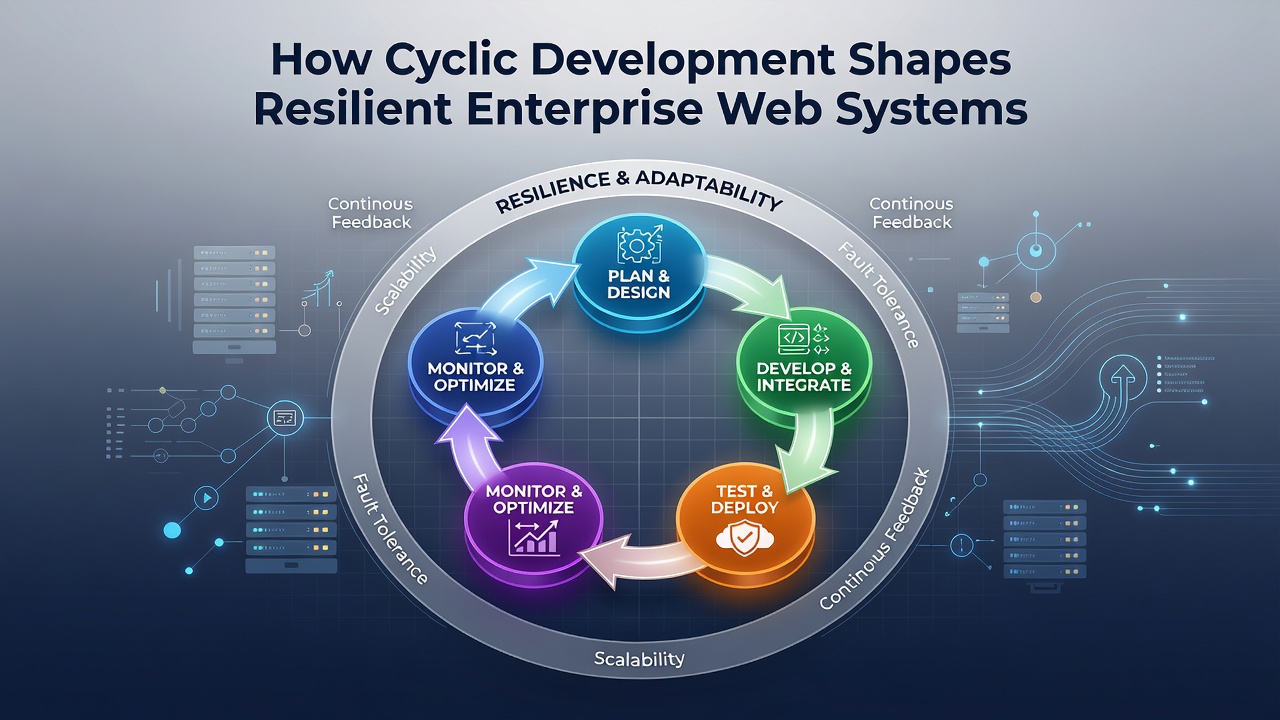
Enterprise web systems rely on structured repetition to maintain stability under changing loads and threats, and cyclic development provides the framework for that repetition through repeated phases of planning, coding, testing, and deployment that feed directly into one another. Organizations apply these loops to address vulnerabilities early, adjust to new requirements, and scale components without full system overhauls, which reduces downtime and supports continuous availability across distributed environments.
Core Elements of Cyclic Processes in Large-Scale Web Architectures
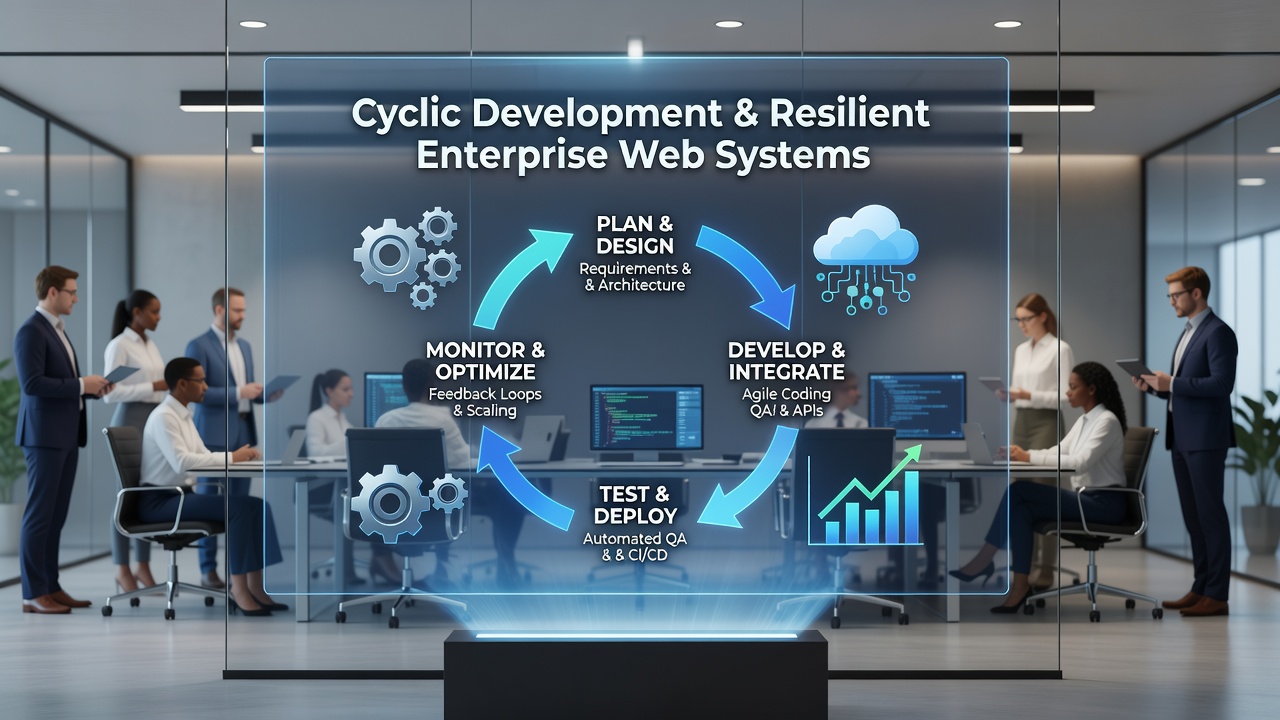
Teams break projects into short iterations that typically last two to four weeks, during which developers integrate code changes, run automated tests, and gather performance metrics before moving to the next cycle. This approach incorporates continuous integration pipelines that automatically compile and verify updates, while continuous delivery stages push validated builds to staging or production environments under controlled conditions. Data from these cycles reveal patterns in error rates and user behavior, allowing engineers to refine algorithms and database queries in subsequent rounds rather than waiting for major releases.
Resilience emerges when each iteration includes explicit checks for fault tolerance, such as load testing under simulated traffic spikes and security scans that flag injection risks or authentication weaknesses. Observers note that systems built this way recover faster from outages because rollback procedures and feature flags, tested repeatedly, become standard parts of the deployment process. Research indicates that organizations using these methods report lower mean time to recovery compared with traditional waterfall models that deliver updates only after lengthy development stretches.
Adaptation Mechanisms and Feedback Integration
Feedback arrives from monitoring tools, user reports, and automated alerts that feed into the planning phase of the next cycle, creating a closed loop where performance data directly informs code adjustments. Engineers examine logs from production traffic to identify bottlenecks in API endpoints or memory leaks in microservices, then prioritize fixes within the current iteration backlog. This constant refinement supports horizontal scaling decisions, such as adding container instances or optimizing caching layers, without disrupting live operations.
Security updates follow the same rhythm, with vulnerability assessments conducted at the end of each cycle and patches deployed through the same automated channels used for feature releases. In September 2026, updates to common web frameworks are expected to align with these shorter cycles, enabling enterprises to incorporate patches for newly disclosed issues within days rather than weeks. External standards bodies, including the National Institute of Standards and Technology, document how iterative validation reduces exposure windows in mission-critical applications.
Scalability Outcomes Supported by Repeated Validation
Enterprise platforms handling millions of daily requests benefit when cyclic development incorporates capacity planning at regular intervals, allowing teams to model growth scenarios and adjust resource allocation before demand peaks occur. Database sharding strategies, content delivery network configurations, and load balancer rules undergo repeated validation, which surfaces configuration errors that would otherwise surface only under real-world stress. Figures from industry reports show that systems refined through multiple cycles maintain higher uptime percentages during traffic surges than those updated through infrequent, large-scale releases.
Case examples include financial service portals that adopted two-week iteration schedules to integrate regulatory compliance checks automatically, and retail sites that used cycle data to optimize checkout flows ahead of seasonal events. Each loop adds incremental improvements to error handling and session management, building cumulative resistance to both technical failures and external attacks. The European Union Agency for Cybersecurity has published guidance on embedding similar iterative controls into digital service architectures to meet resilience benchmarks across member states.
Measurement and Continuous Improvement Practices
Key performance indicators tracked across cycles include deployment frequency, change failure rate, and time to restore service, metrics that teams review at the close of every iteration to set targets for the next round. Automated dashboards compile these numbers from version control systems, test suites, and production monitors, giving architects a clear view of where processes need tightening. Over successive cycles, these measurements demonstrate trends such as declining defect density and increasing automation coverage in regression testing suites.
Enterprises also apply cyclic reviews to infrastructure as code, where configuration files for servers, networks, and storage undergo the same testing and deployment loops as application code. This practice ensures that environment drifts are caught early and corrected before they affect live systems, contributing to overall stability. Data shows that organizations maintaining these practices experience fewer incidents tied to misconfigurations compared with those relying on manual setup procedures.
Conclusion
Cyclic development sustains resilient enterprise web systems by embedding repeated validation, rapid feedback, and incremental adjustments into everyday workflows. The structured loops allow teams to address emerging issues in security, performance, and scalability without halting operations, while metrics collected across iterations guide long-term architectural decisions. As frameworks and regulatory expectations evolve, the same cyclic discipline continues to support reliable delivery of web services at enterprise scale.