Anna Simon · 12 October 2026
Examining Progressive Refinement Cycles for Cross Platform Data Consistency in Web Environments
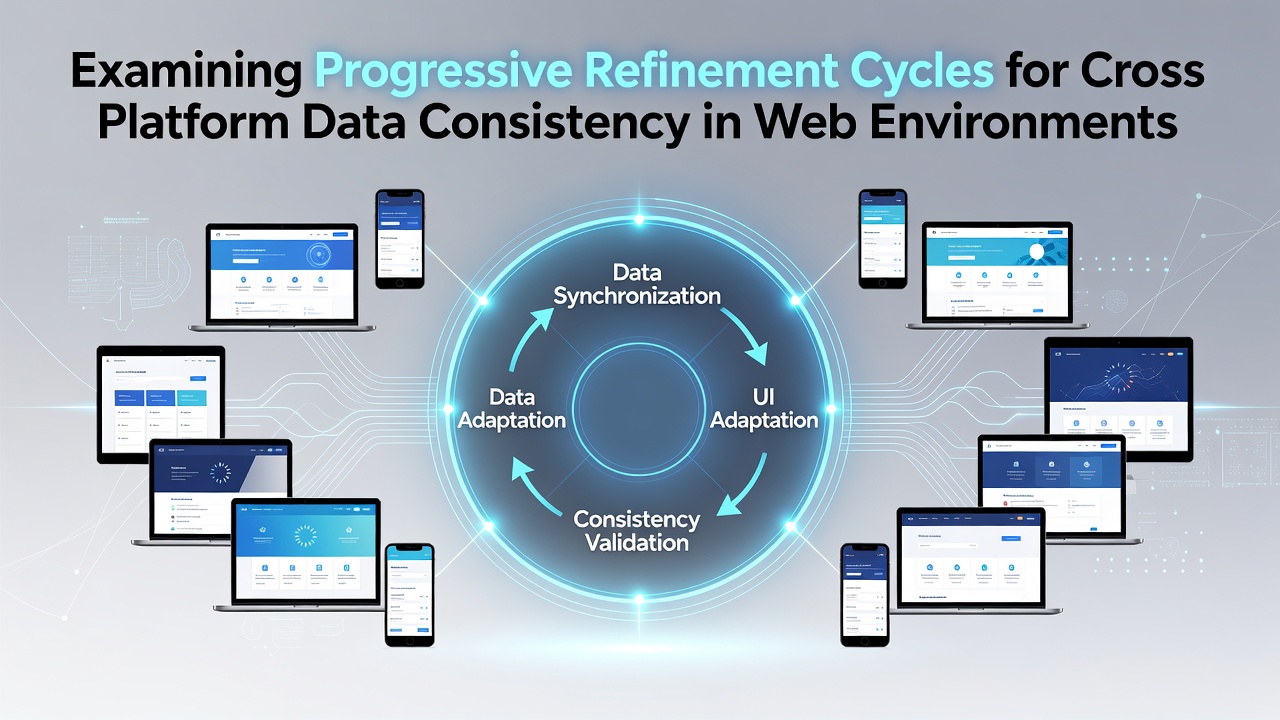
Progressive refinement cycles represent structured iterative processes that developers apply to maintain data consistency across diverse web platforms, and these cycles address synchronization challenges that arise when applications run on browsers, mobile devices, and desktop interfaces simultaneously. Research indicates that such cycles break down consistency checks into successive stages where data states undergo validation, adjustment, and revalidation until alignment occurs across all endpoints. Data shows that organizations implementing these methods experience measurable reductions in synchronization errors, particularly in environments where network latency and device-specific rendering create discrepancies.
Core Components of Refinement Cycles
Each cycle typically begins with an initial data capture phase followed by targeted comparisons against reference models, and observers note that this structure allows teams to isolate inconsistencies early rather than addressing them after full deployment. Studies from institutions in multiple regions reveal that the refinement process incorporates feedback loops where discrepancies trigger automated adjustments or manual interventions depending on severity thresholds. What's interesting is how these cycles integrate with existing web standards to ensure compatibility without requiring complete system overhauls.
Implementation often involves layering consistency protocols on top of standard HTTP and WebSocket communications, while researchers have documented cases where progressive refinement reduced cross-platform drift by up to 40 percent in enterprise deployments. The reality is that these methods rely on versioned data snapshots that evolve through each iteration, and evidence suggests the approach scales effectively when paired with monitoring tools that track state changes in real time.
Application in Modern Web Architectures
Cross-platform consistency demands grow more complex as applications incorporate progressive web app features alongside native integrations, and experts have observed that refinement cycles help manage these demands by enforcing incremental updates rather than wholesale data refreshes. In October 2026, reports from various technology conferences highlighted deployments where refinement cycles synchronized user preferences and session data across browser extensions and mobile web views without interrupting active sessions. Turns out that such timing aligns with broader industry shifts toward hybrid environments where data flows between cloud services and edge devices.
One documented approach draws on distributed ledger concepts adapted for web use, although practitioners adapt these ideas to fit lighter resource constraints typical of browser contexts. According to W3C standards documentation, related specifications support structured data exchange that complements refinement techniques by providing consistent serialization formats. This integration proves useful when handling structured content like user profiles or inventory records that must remain identical regardless of access point.

Observed Outcomes and Measurement Approaches
Teams measure success through metrics such as conflict resolution time and data divergence rates, and figures reveal that organizations tracking these indicators over multiple refinement iterations achieve steadier performance gains. There's this case where experts found that incorporating machine-assisted validation within cycles accelerated convergence without compromising accuracy, particularly when dealing with high-volume transactional data. The ball's in their court when it comes to selecting which validation rules to automate versus those requiring human oversight, since requirements differ by industry and data sensitivity.
Additional findings from European sources indicate that refinement cycles align well with regulatory expectations around data integrity, and ENISA guidelines emphasize structured verification steps that match the iterative nature of these processes. Observers note that adoption rates increased following the release of updated tooling in late 2025, setting the stage for broader implementation throughout 2026 and beyond.
Conclusion
Progressive refinement cycles continue to evolve as web environments grow more interconnected, and data from ongoing implementations shows sustained benefits in consistency maintenance. Researchers continue to examine how these methods interact with emerging protocols and device capabilities, while practical deployments demonstrate their role in reducing synchronization overhead. The approach provides a repeatable framework that adapts to varying platform constraints without demanding uniform infrastructure across all endpoints, and continued documentation of results will support further refinement of the underlying techniques.